

 Nov 24, 2025
 7 min read
Awaited Saviours Compared: Kalki, the Messiah, the Mahdi, Maitreya and More

Many religions teach that the world will one day be put right by a figure who has not yet come: Kalki, the Saoshyant, the Messiah, the Mahdi, Maitreya. Scholars call this hope messianism. It is widespread, but not universal. Some major traditions await no saviour, and the figures that do appear differ in who they are, what they will do and when they are expected. This guide sets out what each tradition actually teaches, drawing on its own texts. Beliefs vary within every faith, so treat these as summaries of mainstream views.

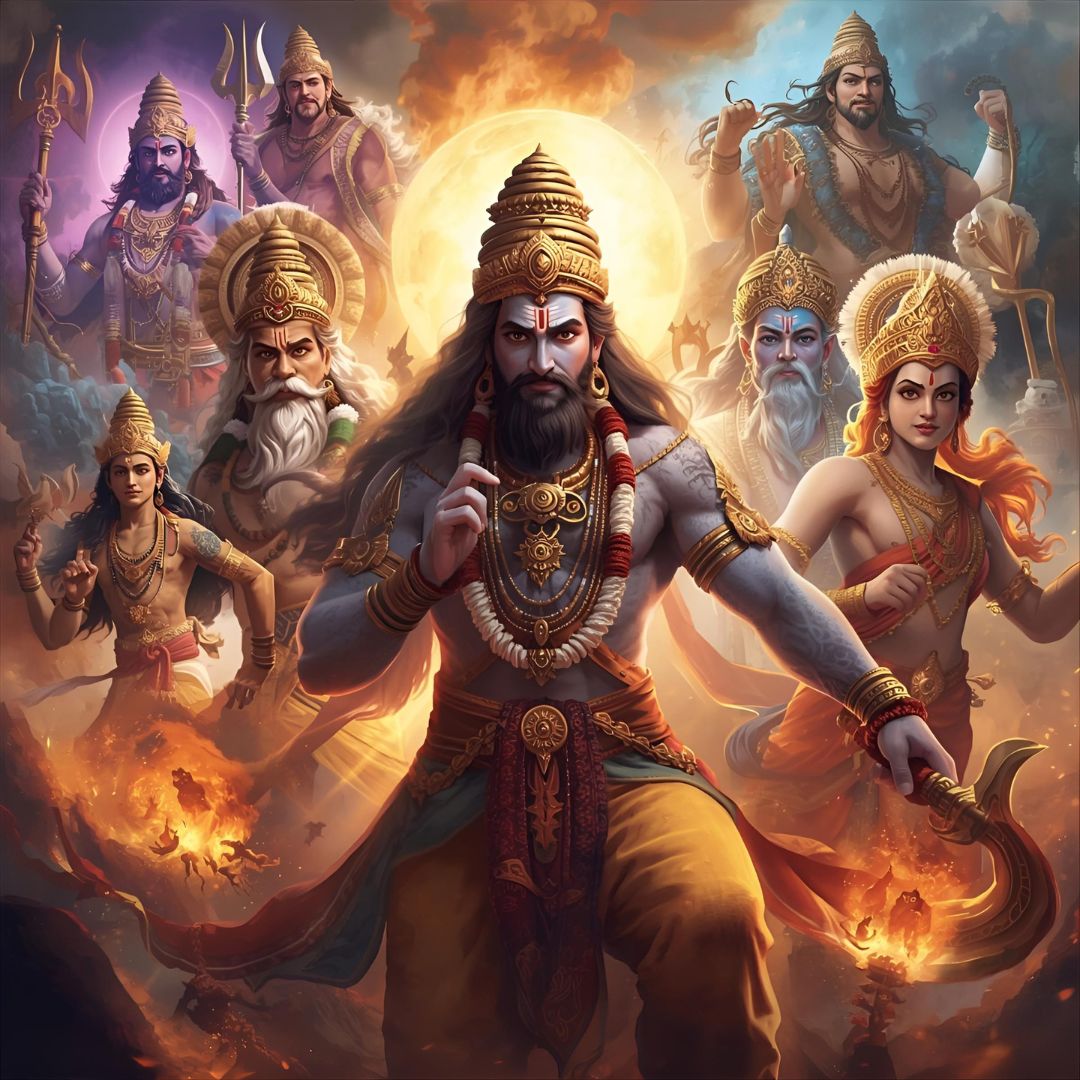
Illustration: the hope of a final saviour, shared by many traditions.
Hinduism: Kalki
Hindu cosmology measures time in four repeating ages, or yugas. The present age, Kali Yuga, is the last and worst, marked by declining virtue. The Vishnu Purana and the later Kalki Purana say that at its end Vishnu will be born as Kalki, his tenth and final avatar, in a village called Shambhala. He is pictured on a white horse with a blazing sword, destroying the wicked and starting a new Satya Yuga, an age of truth. In traditional reckoning Kali Yuga began in 3102 BCE and lasts 432,000 years, which would place Kalki more than 425,000 years in the future. Many Hindus read the account symbolically.
Zoroastrianism: the Saoshyant
Zoroastrianism, the ancient religion of Persia, has one of the oldest fully developed saviour figures. Its later texts describe three saviours, each born a thousand years apart, from Zoroaster's seed miraculously preserved in a lake, to virgin mothers who bathe there. The last, the Saoshyant ("one who will bring benefit"), raises the dead and leads the final renewal of the world, called Frashokereti, when evil is destroyed for good (Encyclopaedia Iranica: Saošyant).
Many historians, including Mary Boyce and Norman Cohn, have argued that these Persian ideas shaped Jewish thought about the end of time after Cyrus the Great conquered Babylon in 539 BCE and let the Jewish exiles return home (see our post on Cyrus). The extent of that influence is still debated.
Judaism: the Messiah (Mashiach)
In Jewish teaching the Messiah is a human being, not a divine one. He is a king descended from David who will gather the Jewish people to the land of Israel, rebuild the Temple in Jerusalem and bring an age of peace. The prophet Isaiah's line that nations "shall beat their swords into ploughshares" (Isaiah 2:4) is the classic picture of that age. Maimonides, the 12th-century philosopher, listed belief in the Messiah's coming among his Thirteen Principles of Faith. The prayer-book version of that principle says that "though he may tarry", the believer waits for him every day.
History has seen several messianic claimants. Simon bar Kokhba led a revolt against Rome in 132–135 CE and was hailed by Rabbi Akiva as the Messiah. In 1665–66 Sabbatai Zevi attracted followers across the Jewish world before converting to Islam under threat of death from the Ottoman sultan.
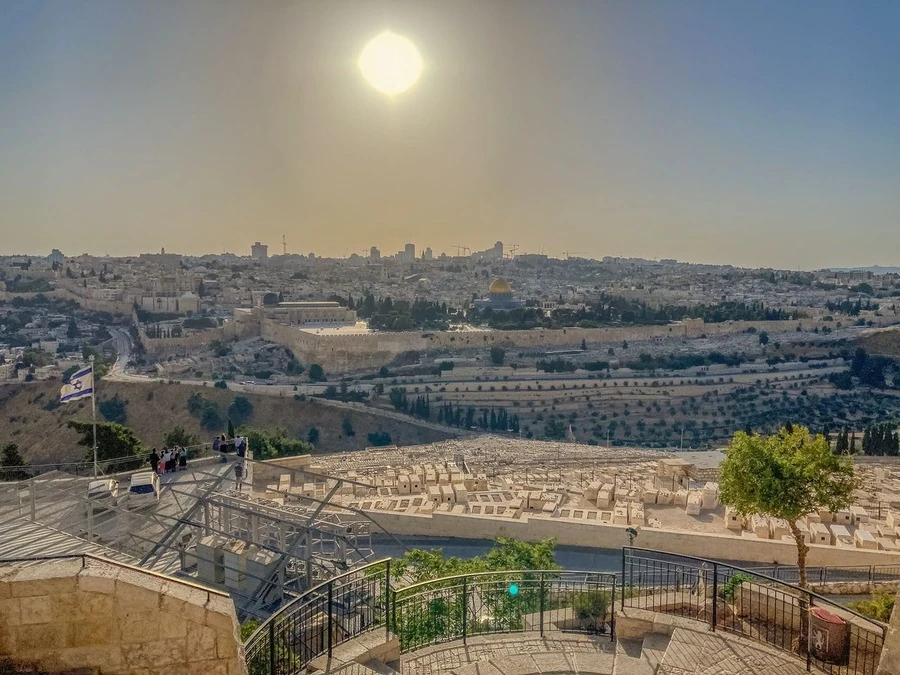
Christians believe Jesus will return, at a time no one knows. Photo: DAVKA / Pexels
Christianity: the Second Coming
Christians believe the Messiah has already come in Jesus, and that he will return. The Nicene Creed, recited in most churches, says he "will come again in glory to judge the living and the dead". The New Testament stresses that the timing is unknown: "about that day or hour no one knows" (Matthew 24:36). That hasn't stopped people from setting dates. The American preacher William Miller predicted the return for 1844, and his followers' "Great Disappointment" when nothing happened led, among other things, to the founding of the Seventh-day Adventist Church.
Islam: the Mahdi and the return of Isa
The Mahdi ("the rightly guided one") does not appear in the Qur'an. Belief in him comes from hadith, reports of the Prophet Muhammad's sayings. These describe a descendant of the Prophet who will "fill the earth with justice as it has been filled with oppression". Sunni and Shia Muslims understand him differently:
- Most Sunni Muslims expect the Mahdi to be born in the future and to lead the community before the end of time.
- Twelver Shia Muslims believe the Mahdi is Muhammad al-Mahdi, the twelfth Imam, born in the 9th century and hidden by God since 874 CE. He will return when God permits. Our post on the vanishing Imam covers this in detail.
Muslims also believe that Isa (Jesus), whom the Qur'an describes as a prophet and the Messiah but not divine, will return. According to hadith he will defeat the Dajjal, a great deceiver, and rule justly. Several people have claimed to be the Mahdi. The best known was Muhammad Ahmad in Sudan, who led a successful uprising against Egyptian and British rule from 1881.
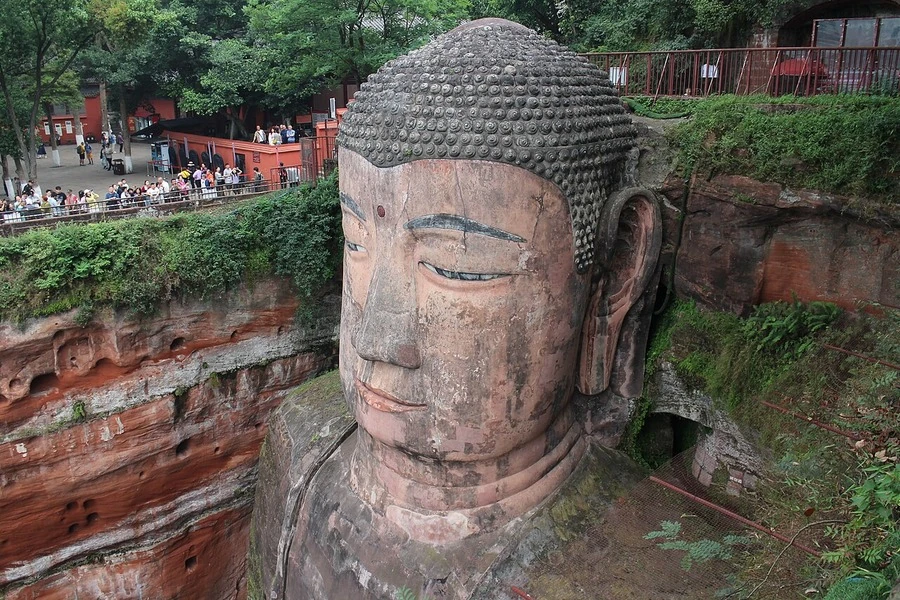
Buddhists of all schools expect a future Buddha, Maitreya. Photo: Suicasmo / Wikimedia Commons, CC0
Buddhism: Maitreya
Buddhists of all schools expect a future Buddha, Maitreya (Metteyya in Pali). He is named in an early Pali text, the Cakkavatti Sihanada Sutta, and is said to be waiting in the Tushita heaven. He will be born when the Buddha's teaching has been completely forgotten. In the texts this is an extremely long time away, when the human lifespan will have risen to 80,000 years. Maitreya is a teacher rather than a conqueror: he rediscovers the path to enlightenment and teaches it again. In China the cheerful, pot-bellied "Laughing Buddha" is traditionally seen as an incarnation of Maitreya.
Jainism: teachers in the next cycle
Jains see time as an endless wheel of rising and falling half-cycles, each with 24 Tirthankaras, enlightened teachers who show the path to liberation. The 24th of the present cycle was Mahavira, in the 6th–5th century BCE. Jain texts say the first Tirthankara of the next rising cycle, Padmanabha, will be the soul of King Shrenika, a follower of Mahavira. This is not a saviour in the usual sense: in Jainism each soul must free itself through its own conduct.
Traditions with renewal but no saviour
- Norse religion. The poem Völuspá describes Ragnarök, in which most of the gods die. Afterwards the earth rises again, green, out of the sea, and the god Baldr returns from the dead. It is a renewal, but no one causes it.
- Ancient Greece and Rome. The poet Hesiod (around 700 BCE) described five ages of humanity, from Gold down to his own Iron Age, with no promise of rescue. Later, around 40 BCE, Virgil's Fourth Eclogue announced a child whose birth would bring back the Golden Age. Christians later read it as a prophecy of Christ.
- Lakota tradition. White Buffalo Calf Woman, who brought the sacred pipe to the Lakota, is said to have promised to return. The rare births of white bison calves, such as one in Yellowstone in 2024, are treated as sacred signs.
Traditions that await no one
- Sikhism. In 1708 the tenth Guru, Guru Gobind Singh, ended the line of human Gurus and declared the scripture, the Guru Granth Sahib, the eternal Guru. Mainstream Sikhism does not expect a future saviour.
- Shinto. There is no end-time figure. The famous myth of the sun goddess Amaterasu hiding in a cave and plunging the world into darkness, until the other gods lure her out, is a story about the return of light. It is not a prophecy.
- Ancient Egypt. Egyptian religion had no returning saviour. One passage in the Book of the Dead (spell 175) even imagines the creator god Atum one day dissolving the world back into the primeval waters.
Why the idea keeps appearing
Historians note that saviour hopes tend to grow strongest under pressure. The Jewish Messiah tradition sharpened under foreign empires, Bar Kokhba rose against Rome and the Sudanese Mahdi against colonial rule. In 1890, as the Lakota faced hunger and the loss of their land, the Ghost Dance movement promised the return of the dead and the old world. In all these cases a promised rescuer gives meaning to suffering and a reason to keep going.
The figures differ in important ways. Some are divine and some human, some fight and some teach, some are expected soon and others in hundreds of thousands of years. Saying that "all religions" await the same saviour flattens differences that believers themselves care about. The companion piece to this post, on how religions picture Judgement Day, looks at what each tradition expects to happen at the end itself.
Sources
- Encyclopaedia Iranica, "SAOŠYANT". https://www.iranicaonline.org/articles/saosyant
- Poetic Edda, Vol. I, "Völuspá (Voluspo)". https://sacred-texts.com/neu/poe/poe03.htm
- The Eclogues and Georgics: The Eclogues, "Virgil (70 BC-19 BC)". https://www.poetryintranslation.com/PITBR/Latin/VirgilEclogues.php




Comments (0)
Leave a Reply
Comments are moderated. Please read our Comment Policy before posting.
Log in to post a comment.