

 Oct 15, 2025
 6 min read
Sanatan Dharma: The Eternal Path of Truth, Hindu Gods, and Ancient Wisdom
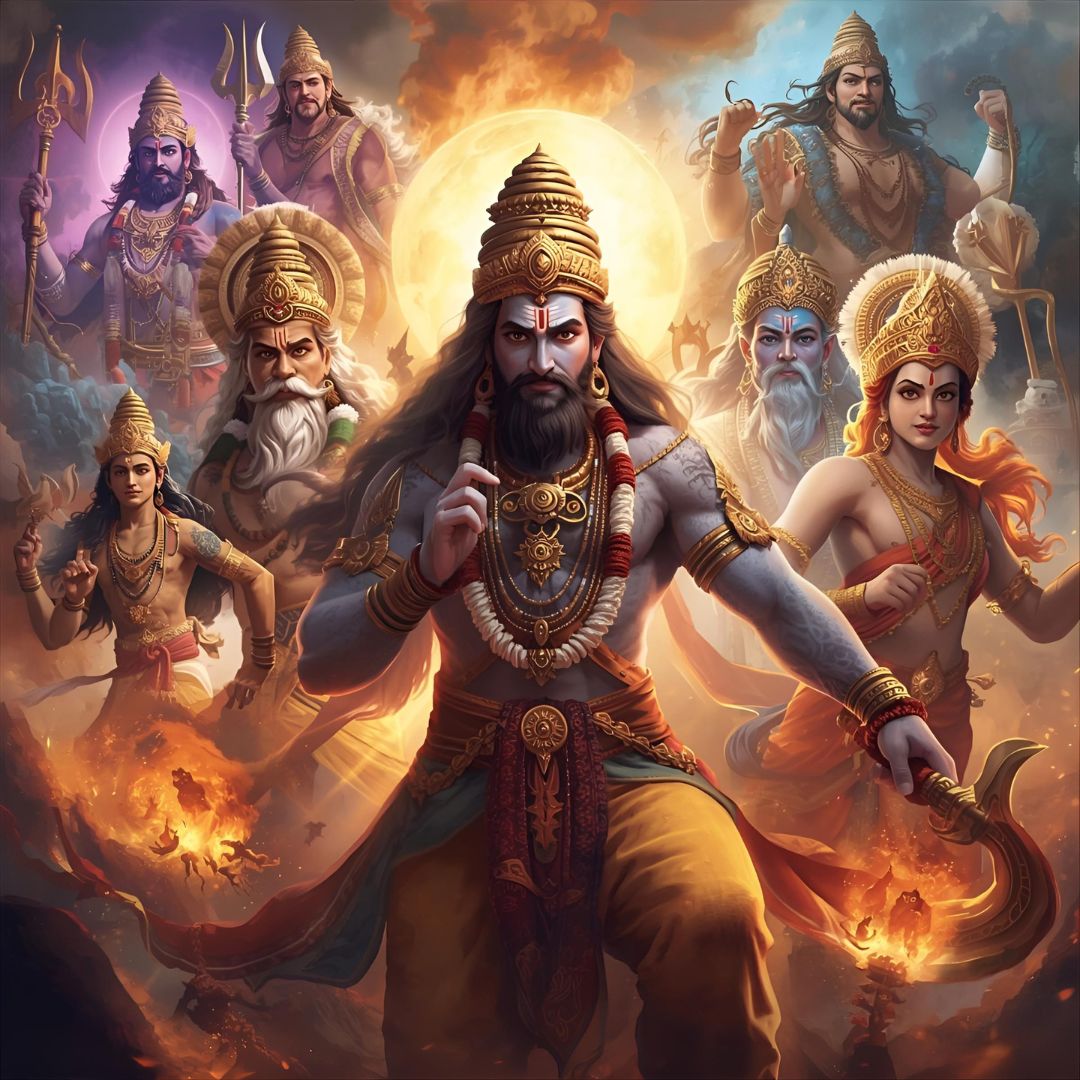
Discover the true meaning of Sanatan Dharma — the eternal law that guides creation, life, and spirit. Learn about Hindu gods like Brahma, Vishnu, Shiva, and the divine goddesses who sustain the balance of the universe.
🌞 Sanatan Dharma: The Eternal Path of Truth, Gods, and Cosmic Harmony
Long before temples rose from stone or man carved prayers into scripts, there existed a whisper in the heart of the universe — a rhythm of truth that flowed through all living things. This eternal rhythm was called Sanatan Dharma, known today as Hinduism, but its meaning goes far beyond religion.
Sanatan Dharma is the “Eternal Way,” the natural law that governs life, time, and the unseen forces that keep creation in balance.
It is not something created — it is existence itself. From the dawn of the cosmos to the breath of every being, it reminds us that divinity is not separate from us — we are part of it.
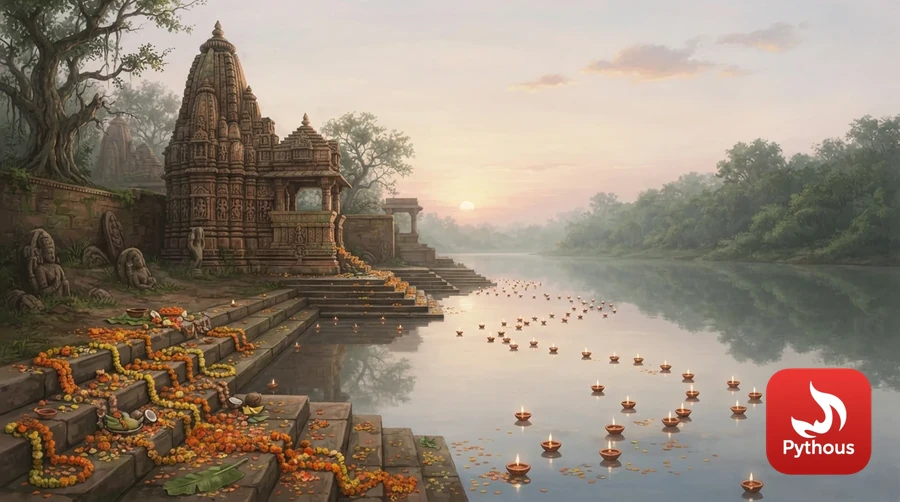
Illustration: a riverside temple at dawn.
🕉️ The Meaning of Sanatan Dharma
The word Sanatan means “eternal” or “without beginning or end,” and Dharma means “cosmic law,” “duty,” or “righteousness.”
Together, they form a philosophy that transcends time — a way of living that aligns one’s mind and soul with universal truth.
Unlike other religions with a single founder or prophet, Sanatan Dharma is an ancient current of wisdom passed through ages — from the Vedas and Upanishads, to the Bhagavad Gita and Ramayana.
Its foundation is not belief, but realization — the understanding that divinity is both within and without.
🔱 The Divine Trinity – Brahma, Vishnu, and Shiva
At the heart of Sanatan Dharma lies the Trimurti, the three forms of the Supreme Reality — Brahma the Creator, Vishnu the Preserver, and Shiva the Destroyer and Transformer.
Brahma – The Creator
Brahma represents the divine force of creation. From his mind and breath, the universe unfolds — time, space, and all beings take form.
Though fewer temples are dedicated to him, his role remains sacred: he symbolizes the power of beginning, the spark of thought that gives birth to reality.
Vishnu – The Preserver
When creation begins to lose balance, it is Vishnu who descends to restore harmony.
He is the protector, the gentle sustainer of worlds — the one who ensures that Dharma (righteous order) remains unbroken.
Through his avatars, such as Rama and Krishna, Vishnu guides humanity toward righteousness and truth.
His stories, especially in the Bhagavad Gita, remind us that goodness and compassion are not mere ideals — they are duties to uphold.
Shiva – The Destroyer and Transformer
Shiva is both the destroyer and the liberator — not a bringer of ruin, but of renewal.
When the universe grows tired and corrupt, he performs the Tandava, the cosmic dance of dissolution, clearing the path for new creation.
He dwells in deep meditation atop Mount Kailash, representing stillness, yet his energy, Shakti, vibrates through all of existence.
In Shiva, destruction is not an end — it is transformation.
🌺 The Divine Feminine – Shakti, Durga, Saraswati, and Lakshmi
In Sanatan Dharma, the feminine is not lesser — she is the power itself.
Known as Shakti, she represents the divine energy that animates every god, every life, every movement of the cosmos.
Durga – The Warrior Mother
Durga, fierce and compassionate, rides her lion into battle to destroy evil. She represents the strength of righteousness, the courage to face darkness without fear.
Lakshmi – The Goddess of Prosperity
Lakshmi embodies abundance, not just in wealth but in harmony and peace.
She blesses those who live in balance — who work with honesty, give with kindness, and honor the cycle of giving and receiving.
Saraswati – The Goddess of Wisdom
Saraswati is the river of knowledge, the sound of every mantra, the muse behind every creation.
Seated on a white lotus, she teaches that wisdom and purity are the true wealth of life.
Without Saraswati, even the gods are powerless — for knowledge gives meaning to creation.
🌞 Lord Krishna – The Voice of Divine Truth
Among Vishnu’s many avatars, Lord Krishna shines as the eternal teacher of the Bhagavad Gita.
On the battlefield of Kurukshetra, he reveals the essence of Dharma to Arjuna — that one must perform their duty selflessly, without attachment to reward.
Krishna’s life is a melody of divine play (Leela), love, and wisdom.
Through his words, humanity learned that God is not distant — He walks with us, speaks through us, and lives within us.
🔥 Lord Rama – The Embodiment of Dharma
Lord Rama, another avatar of Vishnu, stands as the symbol of truth, duty, and moral perfection.
His story in the Ramayana is not just a tale — it’s a mirror of life itself.
Through trials, exile, and battle, Rama shows that walking the path of Dharma may be hard, but it leads to eternal peace.
His devotion to truth, his respect for all beings, and his faith in the cosmic order make him one of the most beloved deities of Sanatan Dharma.
🕯️ The Cosmic Law – Karma, Dharma, and Moksha
Sanatan Dharma teaches that the universe is governed by unbreakable laws:
- Karma: Every action bears fruit — good or bad — in this life or beyond.
- Dharma: The moral order and one’s sacred duty, which sustains harmony in the world.
- Moksha: Liberation from the cycle of birth and death — the ultimate reunion with the Divine.
Unlike many religions that promise heaven or hell, Sanatan Dharma teaches that the soul is eternal — constantly evolving, learning, and returning until it realizes its divine nature.
🌍 The Eternal Philosophy of Sanatan Dharma
Sanatan Dharma is not about worship alone — it is about balance.
It teaches that every being — from the smallest insect to the greatest star — has a role in the cosmic symphony.
It accepts all paths — meditation, devotion, service, or knowledge — as roads leading to the same destination: union with the Supreme Truth.
In its wisdom, it reminds us that:
“Ekam sat vipra bahudha vadanti.”
— Truth is One; the wise describe it in many ways.
🌸 The Legacy of the Eternal Way
Thousands of years have passed, yet the essence of Sanatan Dharma remains untouched — alive in chants, rituals, temples, yoga, and meditation across the world.
It survives because it does not force belief — it invites realization.
Sanatan Dharma is not just the religion of India — it is the religion of eternity, a philosophy that belongs to all humanity.
It whispers that divinity lies not in the sky above, but in the heart within.
And as long as the sun rises and the soul seeks truth, Sanatan Dharma — the Eternal Way — shall never fade.
✨ In Essence
Sanatan Dharma is more than mythology — it’s a living truth.
Through its gods, goddesses, and timeless teachings, it shows humanity a path of harmony, self-realization, and divine love — an eternal light guiding every soul home.


Comments (0)
Leave a Reply
Log in to post a comment.