

 Oct 31, 2025
 5 min read
The Story of the Zodiac: Where Science, Stars, and Spirituality Meet

Since the dawn of civilization, human beings have looked up at the night sky — searching not just for stars, but for meaning.
Long before telescopes and calendars, the sky was humanity’s greatest book — a map of destiny, time, and divine order.
From this cosmic wonder was born one of the most enduring systems in human history: the Zodiac.
A circle of twelve signs, twelve stories — each tied to a constellation, a season, and the rhythm of life itself.
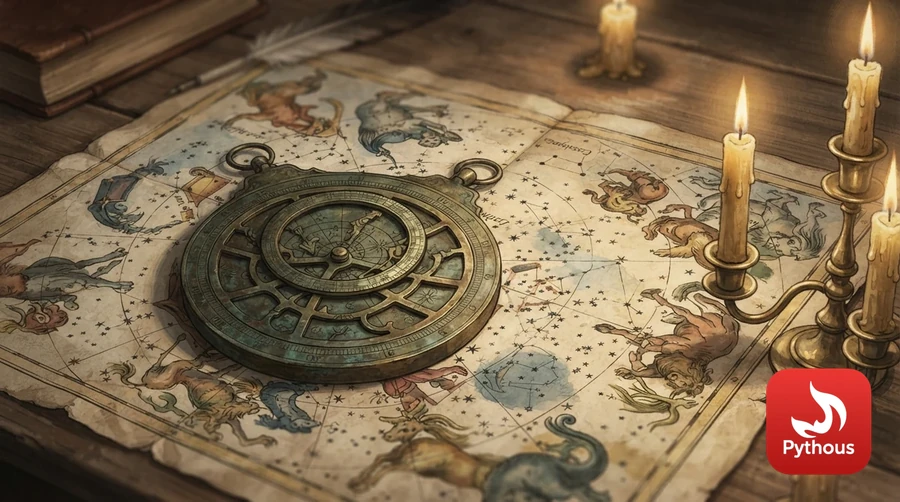
Illustration: the zodiac began as a way to map the sun's path through the stars.
🌠 How the Zodiac Began
The word “Zodiac” comes from the Greek “zōidiakos kyklos”, meaning “circle of little animals.”
But the idea is far older — tracing back more than 4,000 years to Babylonian astronomers.
They noticed that as Earth moved around the Sun, the Sun appeared to pass through a band of constellations — a celestial highway later called the ecliptic.
They divided this band into twelve equal parts, marking the 12 months of the year — and thus the 12 Zodiac signs were born.
To ancient peoples, these constellations weren’t just stars.
They were divine symbols, mirrors of earthly life — showing when to plant crops, when to celebrate harvest, when to wage war, and when to rest.
The Egyptians, Greeks, Romans, and later Hindus all adapted and expanded this system, blending astronomy with religion, mythology, and philosophy.
It became both a calendar of the heavens and a mirror of the human soul.
🧭 The 12 Zodiac Signs and Their Dates
| SignDatesElementSymbolic Meaning | |||
| ♈ Aries | March 21 – April 19 | Fire | Courage, beginnings, leadership |
| ♉ Taurus | April 20 – May 20 | Earth | Stability, loyalty, nature |
| ♊ Gemini | May 21 – June 20 | Air | Curiosity, duality, intellect |
| ♋ Cancer | June 21 – July 22 | Water | Emotion, family, intuition |
| ♌ Leo | July 23 – August 22 | Fire | Strength, pride, creativity |
| ♍ Virgo | August 23 – September 22 | Earth | Order, purity, logic |
| ♎ Libra | September 23 – October 22 | Air | Balance, harmony, justice |
| ♏ Scorpio | October 23 – November 21 | Water | Passion, mystery, transformation |
| ♐ Sagittarius | November 22 – December 21 | Fire | Freedom, exploration, truth |
| ♑ Capricorn | December 22 – January 19 | Earth | Discipline, ambition, wisdom |
| ♒ Aquarius | January 20 – February 18 | Air | Innovation, vision, humanity |
| ♓ Pisces | February 19 – March 20 | Water | Compassion, dreams, spirituality |
Each sign corresponds to the position of the Sun in a constellation during a person’s birth — a tradition that links cosmic motion to human personality.
🔭 The Zodiac and the Science of the Stars
At its heart, the Zodiac is a scientific calendar based on astronomy — the study of celestial movements.
The ancient astrologers were the first astronomers.
They tracked planetary motions, mapped eclipses, and predicted seasons — long before modern physics existed.
However, as science advanced, a distinction grew:
- Astronomy became the study of what is — measurable, physical space.
- Astrology became the study of what it means — symbolic, emotional, spiritual.
Yet, both share the same roots — both were born from humanity’s need to find order in the cosmos.
Even today, NASA acknowledges that the Zodiac constellations are real star patterns through which the Sun passes every year.
But modern astronomers also note that due to the Earth’s slow “wobble” (precession of the equinoxes), the positions of constellations have slightly shifted from ancient times.
🔮 The Zodiac and Religion: The Divine in the Stars
For ancient civilizations, the heavens were sacred — a temple of gods.
In Mesopotamia, each Zodiac sign was ruled by a deity — Aries by the god of war, Taurus by the goddess of fertility, Leo by the sun god.
In Egypt, the rising of Sirius (the Dog Star) marked the flooding of the Nile — seen as a divine sign from Isis and Osiris.
In Greek mythology, the constellations were said to be heroes and creatures placed among the stars by the gods.
Even in Christian art, the 12 Apostles and the 12 Tribes of Israel were often associated with Zodiac imagery — not as worship, but as a symbol of divine order.
And in Hinduism, the concept of the Rashis and Nakshatras (lunar constellations) mirrors the same cosmic pattern — connecting karma, time, and destiny.
To the ancients, understanding the Zodiac was a way to read God’s handwriting in the sky.
🧬 The Zodiac and Human Psychology
In modern times, astrology has evolved into a language of self-understanding.
It’s not about predicting the future, but about exploring patterns of personality.
Psychologists like Carl Jung saw astrology as a symbolic system — a mirror of the human psyche.
He called it “the sum of all psychological knowledge of antiquity.”
Each sign represents an archetype — a timeless pattern of human nature.
For example:
- Aries embodies the Warrior, driven by passion and courage.
- Libra represents the Peacemaker, seeking harmony.
- Pisces reflects the Dreamer, guided by empathy and imagination.
Astrology, then, is less about fate and more about reflection — a poetic way of seeing how we connect with time, energy, and life cycles.
🌞 The 12 Signs, the 4 Elements, and Balance in Nature
The Zodiac also divides into four elements — Fire, Earth, Air, and Water — each representing a way of being:
- Fire (Aries, Leo, Sagittarius) — action, inspiration, and willpower.
- Earth (Taurus, Virgo, Capricorn) — stability, structure, and realism.
- Air (Gemini, Libra, Aquarius) — intellect, communication, and ideas.
- Water (Cancer, Scorpio, Pisces) — emotion, intuition, and depth.
Just as the universe maintains balance through its elements — so too does the Zodiac reflect the balance within human nature.
🌌 The Zodiac Today: Science, Faith, and Wonder
In today’s age of satellites and quantum physics, some see astrology as outdated — yet millions still read horoscopes, celebrate moon phases, or wear Zodiac symbols.
Why?
Because deep down, we all long to feel connected — to something greater than ourselves.
The Zodiac, even in its ancient form, still reminds us that our lives are woven into a larger cosmic rhythm — the same stars our ancestors watched thousands of years ago.
Whether you approach it as science, spirituality, or symbolism, the Zodiac remains a testament to humanity’s greatest curiosity:
Not just what’s out there, but what it means to be part of it.



Comments (0)
Leave a Reply
Log in to post a comment.