

 Jun 01, 2026
 6 min read
Area 51: What the Declassified Records Show, and Why the UFO Stories Stuck

For nearly sixty years the US government would not say the name of a base in the Nevada desert. Then, in August 2013, the National Security Archive at George Washington University published a CIA history of the U-2 spy plane, released under a freedom-of-information request it had filed in 2005. Earlier copies had the passages about the base blacked out. This one didn't, and it included a map. It was the first time the government had officially acknowledged Area 51. What the documents describe is a Cold War aircraft test site. That history explains a good deal of the UFO legend that grew around the base, though not all of it.
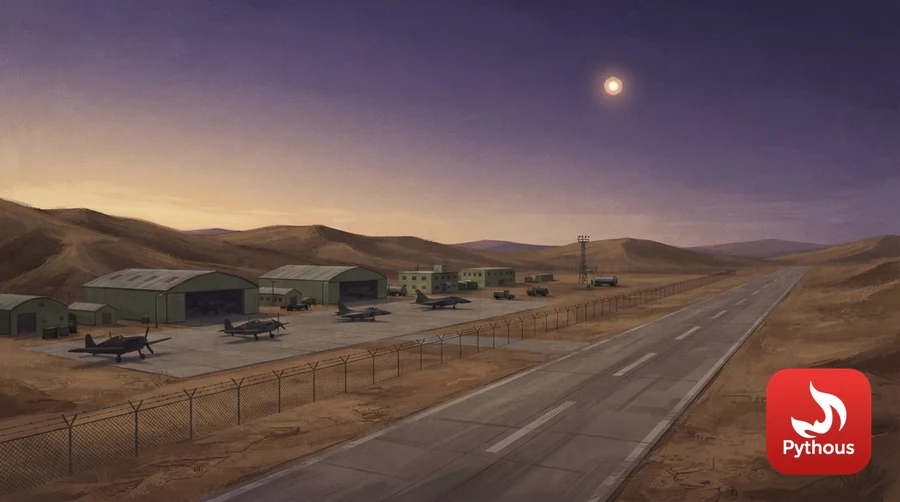
Illustration: a remote Nevada desert airbase at dusk.
How the base was chosen
In 1955 the CIA was building the U-2, a plane meant to fly high enough over the Soviet Union to photograph it without being shot down. It needed somewhere secret to test it. That April, the CIA's Richard Bissell, Lockheed designer Kelly Johnson and test pilot Tony LeVier flew over the Nevada desert looking for a site. They chose Groom Lake, a flat dry lake bed beside the Atomic Energy Commission's nuclear test site, where outsiders were already kept away. Johnson called it "Paradise Ranch" to make it sound appealing to recruits. The name "Area 51" came from a numbered block on the test site's map.
The U-2 first flew there in August 1955. The CIA history published by the National Security Archive describes the building of the base and the early test flights.
The UFO connection starts here
The U-2 cruised at over 60,000 feet. Airliners at the time flew at roughly 10,000 to 20,000 feet, and most people thought nothing could fly much higher. Early U-2s were unpainted silver. At dusk, when the ground was already dark, the plane could still catch the sun and shine like a moving light in the sky. Pilots and people on the ground reported what they saw.
According to a 1997 article by CIA historian Gerald Haines, the Air Force's UFO investigation, Project Blue Book, knew about the flights and checked many of these reports with the CIA against U-2 flight logs. It could explain them but could not say so publicly, so it offered natural explanations instead. Haines wrote that manned reconnaissance flights accounted for more than half of UFO reports from the late 1950s through the 1960s (CIA, "CIA's Role in the Study of UFOs, 1947–90"). That figure was based on estimates by people who worked on the programmes and is disputed by some UFO researchers. Still, it shows the government had reason to let the sightings stay unexplained.
What was actually tested there
- A-12 OXCART. The CIA's successor to the U-2 first flew at Groom Lake in 1962. It was built largely of titanium and designed to fly at more than three times the speed of sound. Its Air Force sibling, the SR-71 Blackbird, made its first flight at Palmdale in California, but the A-12 work behind it happened in Nevada.
- Soviet fighters. From 1968 the Air Force flew captured or acquired Soviet MiG jets at the site to learn how to fight them. The National Security Archive's "Area 51 File" collects documents on these programmes.
- Stealth. Have Blue, the small prototype that proved stealth shaping worked, flew there in 1977. It led to the F-117 Nighthawk, which was flown in secret from a separate Nevada site for years before it was revealed in 1988.
Many of these aircraft looked like nothing the public had seen, and some flew only at night. Once they were declassified, a number of old sightings had an ordinary explanation.
Roswell, Lazar and the alien stories
The alien side of the legend has two main sources. The first is Roswell. In 1947, eight years before Area 51 existed and about 1,000 km away in New Mexico, the local Army airfield announced it had recovered a "flying disc", and within a day the Army said it was a weather balloon. Air Force reports in the 1990s said the debris came from Project Mogul, a then-secret train of balloons designed to detect Soviet nuclear tests. They said reports of "alien bodies" had probably merged with memories of crash-test dummies dropped from balloons in the 1950s. In 2024 the Pentagon's UFO office, AARO, reviewed the historical record. It found no evidence that the government had ever recovered or reverse-engineered alien technology, and judged the Roswell material consistent with Mogul.
The second is Bob Lazar, who said on Las Vegas television in 1989 that he had worked on alien spacecraft at a site called S-4 near Area 51. Investigators found no record of the MIT and Caltech degrees he claimed, and no evidence for the craft has emerged. Lazar's story did more than anything else to fix "Area 51" and "aliens" together in popular culture.
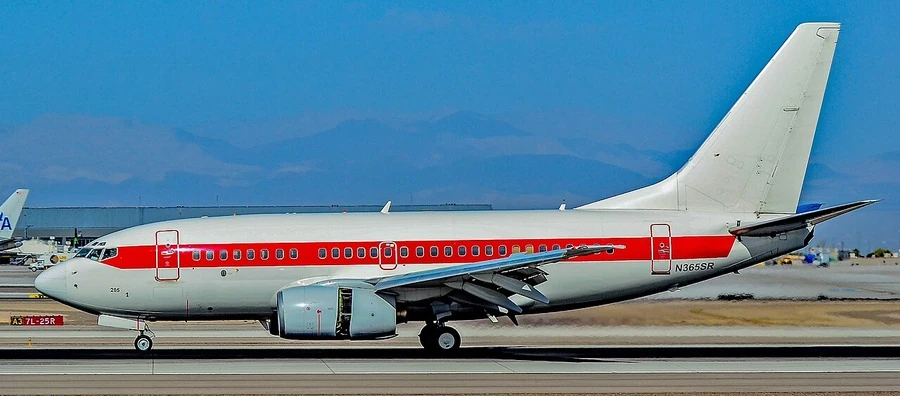
Workers still commute on the unmarked 'Janet' flights from Las Vegas. Photo: Tomás Del Coro / Wikimedia Commons, CC BY-SA 4.0
Secrecy kept the story going
For decades the base did not appear on public maps and officials would not discuss it. Workers commuted from Las Vegas on unmarked airliners known by their call sign, "Janet", and those flights still run. In the 1990s former workers sued, saying they had been harmed by the open burning of hazardous waste at the base. In 1995 President Clinton exempted the site from environmental disclosure rules on national-security grounds, which blocked the case from going further. Each refusal to explain gave the theories more room.
Area 51 became a tourist draw. Nevada named State Route 375, which runs past the area, the "Extraterrestrial Highway" in 1996. In 2019 a joke Facebook event called "Storm Area 51" drew about two million RSVPs. On the day, a few thousand people gathered at festivals in the nearby desert towns, and only a small crowd went to the gates.
What we know, and what we don't
The base is still active, still guarded and still surrounded by restricted airspace, and current work there is classified. Anyone can see its runways and hangars on commercial satellite images. The documented record is clear on the early decades: Area 51 was built to develop spy planes, later tested stealth aircraft and foreign jets, and its secrecy, together with shiny planes at impossible altitudes, produced a wave of UFO reports. No released document, investigation or credible witness has shown evidence of alien craft there.
The documented history is strange enough without aliens. It involves a plane photographing the Soviet Union from 13 miles up in the 1950s, a titanium jet built to fly at Mach 3 in the early 1960s, and a government that wouldn't name a base that half the world had heard of. For another place where myth and history overlap, see our post on the underground cities of Cappadocia.
Sources
- and Area 51, "The Secret History of the U-2". https://nsarchive2.gwu.edu/NSAEBB/NSAEBB434/
- CSI, "CIA's Role in the Study of UFOs, 1947-1990". https://www.cia.gov/resources/csi/studies-in-intelligence/studies-in-intelligence-1997/cias-role-in-the-study-of-ufos-1947-1990
- National Security Archive, "The Area 51 File: Secret Aircraft and Soviet MiGs". https://nsarchive.gwu.edu/node/3324




Comments (0)
Leave a Reply
Comments are moderated. Please read our Comment Policy before posting.
Log in to post a comment.