

 Jun 03, 2026
 4 min read
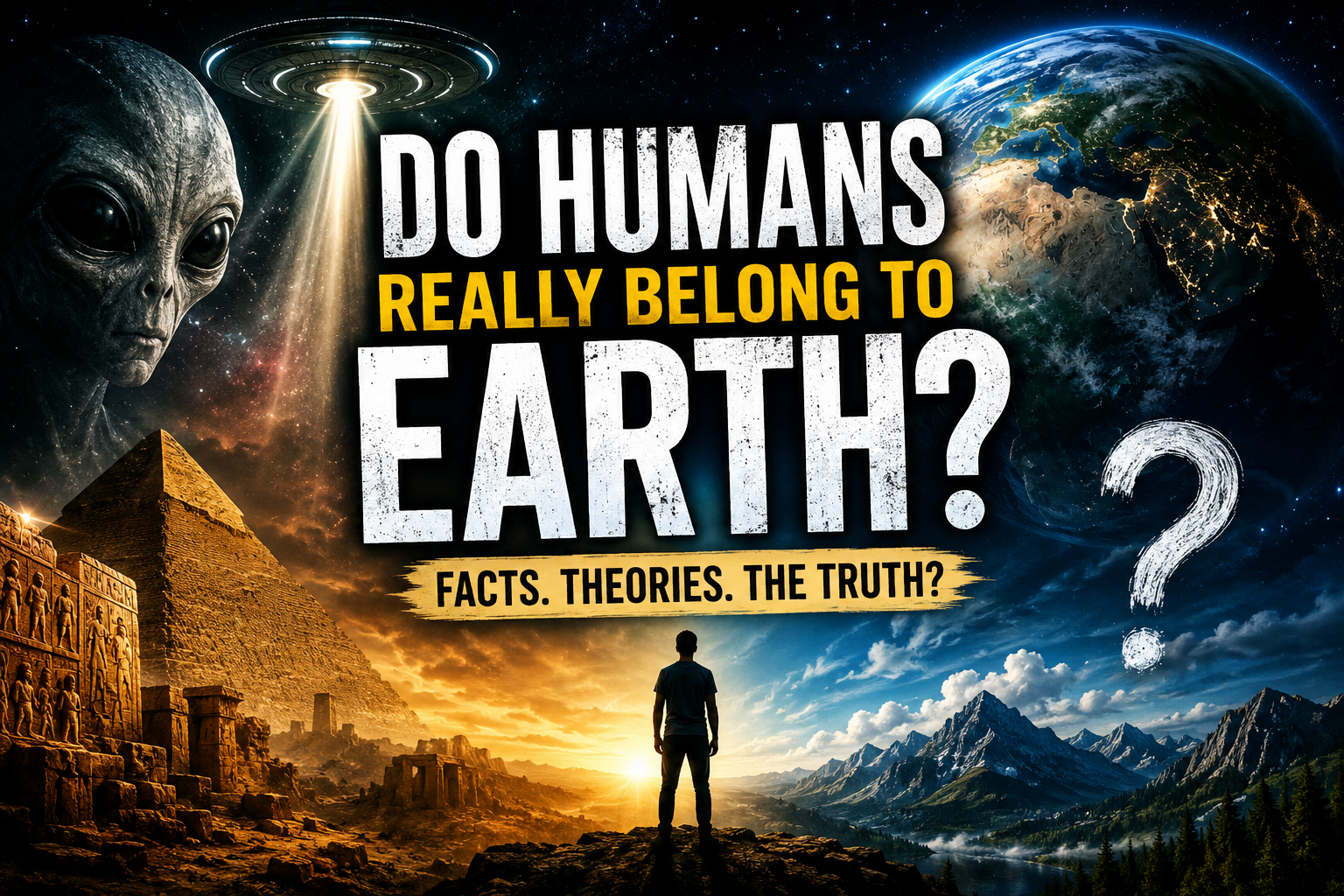
Do Humans Really Belong to Earth?
The Question That Refuses to Die
Look up at the night sky for a moment.
Among billions of stars, countless planets, and endless darkness, one question quietly waits in the shadows:
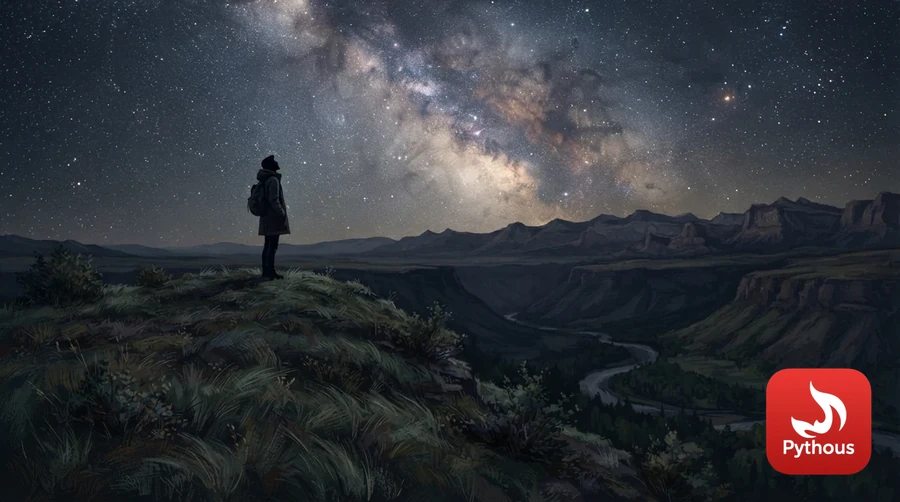
Illustration: are we made for this planet, or just passing through?
Do humans truly belong to Earth?
It sounds like science fiction. Yet for decades, scientists, philosophers, and theorists have debated whether humanity is perfectly suited to this planet—or strangely out of place.
The answer depends on whether you trust hard science, mysterious theories, or simply your own observations.
And once you start looking closely, the question becomes surprisingly difficult to ignore.
The Strange Creature Called Human
Earth is filled with life forms that seem perfectly adapted to their environments.
Birds fly effortlessly through the skies.
Fish breathe underwater.
Polar bears survive freezing temperatures.
Camels endure scorching deserts.
Humans, however, appear oddly fragile.
Leave a human naked in the wilderness and survival becomes a challenge almost immediately. Too much sunlight can damage our skin. Too little sunlight affects our health. Extreme cold can kill us. Extreme heat can kill us. Many animals can survive in environments where humans would last only hours.
Some researchers have pointed out that humans suffer from back pain more than most animals. Childbirth is unusually difficult and dangerous compared to many species. Even our eyes are vulnerable to sunlight, requiring protection.
To some theorists, these weaknesses raise a provocative question:
If evolution perfectly shaped us for Earth, why do we seem so uncomfortable here?
The Gravity Problem
One of the most popular arguments comes from the effects of gravity.
Several researchers and authors have suggested that human bodies might be carrying a hidden clue.
Earth’s gravity is strong enough that many people suffer from spinal issues, joint problems, and back pain throughout their lives. Some theorists argue that our bodies seem “overloaded,” as if they evolved under slightly lower gravity conditions.
Scientifically, however, there is no evidence that humans evolved anywhere other than Earth. Evolutionary biology clearly traces our ancestry through millions of years of life on this planet.
Still, the gravity argument continues to fascinate people because it taps into a deeper feeling: sometimes humans seem like visitors rather than natives.
The Ancient Astronaut Theory
Now the story becomes even stranger.
In the 1960s, the Ancient Astronaut Theory gained worldwide attention.
According to this idea, intelligent extraterrestrial beings may have visited Earth thousands of years ago and influenced human development.
Supporters point to ancient monuments, mysterious myths, and stories of gods descending from the sky.
They ask questions such as:
How did ancient civilizations build massive structures with limited technology?
Why do so many cultures describe beings coming from the heavens?
Why are similar myths found across distant parts of the world?
Mainstream archaeologists strongly reject these claims, explaining that ancient civilizations possessed remarkable engineering skills that are often underestimated today.
Yet the theory remains popular because it offers a dramatic alternative explanation for humanity’s rise.
The Scientific Answer
Despite the mystery, modern science provides a powerful explanation of where humans came from.
Our DNA connects us to every living thing on Earth.
The fossil record shows a gradual chain of evolution stretching back millions of years.
Human ancestors evolved in Africa and slowly spread across the globe.
The genetic evidence is overwhelming.
Every known scientific investigation points toward the same conclusion:
Humans evolved on Earth.
Not on Mars.
Not on a distant star.
Not through alien intervention.
Earth is our birthplace.
At least according to all evidence currently available.
Then Why Do We Feel Different?
Perhaps the real mystery is not whether humans belong to Earth.
Perhaps it is why we often feel as though we don’t.
Unlike other animals, humans constantly imagine worlds beyond their reach.
We build telescopes to see distant galaxies.
We send spacecraft into deep space.
We dream of living on other planets.
No other known species spends its nights wondering what lies beyond the stars.
Maybe that restless curiosity creates the illusion that we are strangers here.
Maybe humans feel disconnected from Earth because we are the first species capable of questioning its place in the universe.
A Different Theory
What if humans belong to Earth completely…
but were never meant to stay only on Earth?
Every major step in human history has involved moving into new frontiers.
We crossed deserts.
We crossed oceans.
We crossed continents.
Now we are preparing to cross into space.
Perhaps our discomfort is not evidence that we came from somewhere else.
Perhaps it is evidence that we are meant to go somewhere else next.
The Final Thought
The question “Do humans belong to Earth?” may never stop captivating us.
Science says we are children of this planet, shaped by billions of years of evolution.
Theories whisper that there may be more to the story.
But whether humanity began among the stars or in the ancient soils of Earth, one fact remains undeniable:
We are the only known creatures capable of looking at the universe and asking where we came from.
And maybe that search for answers—the endless desire to explore, question, and dream—is what truly makes us human.
Perhaps we belong to Earth.
Yet at the same time, part of us has always belonged to the stars.



Comments (0)
Leave a Reply
Log in to post a comment.