
 Mar 08, 2025
 4 min read
Generative AI: Revolutionizing Content Creation and Beyond

Introduction
Artificial Intelligence (AI) has come a long way from simple rule-based systems to powerful machine learning models that can mimic human-like tasks. One of the most transformative developments in recent years is Generative AI, which focuses on creating new content—text, images, music, video, and more—rather than merely analyzing or classifying existing data. This capability is reshaping industries across the board, offering innovative ways to generate unique, high-quality content quickly and efficiently.
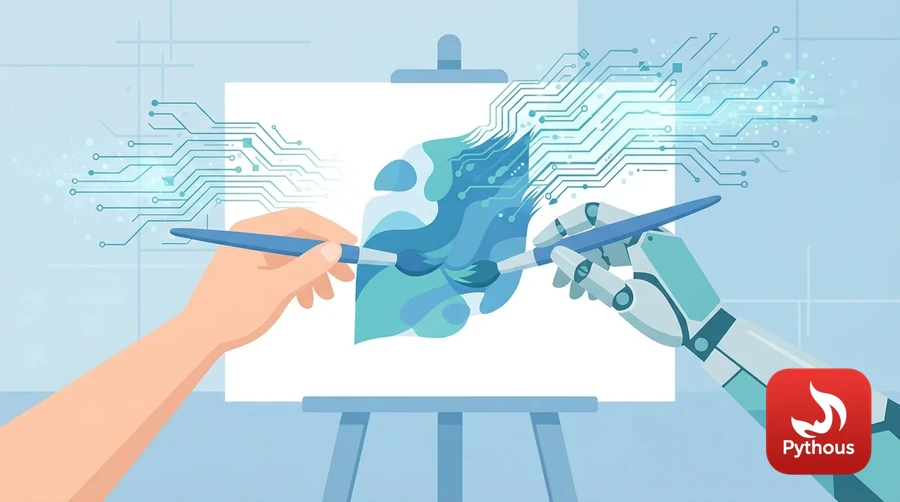
Illustration: generative AI as a creative collaborator.
What is Generative AI?
Generative AI refers to a subset of machine learning models—often leveraging deep learning architectures—that produce new, original outputs. Unlike traditional AI, which might categorize or detect patterns, generative models learn the underlying structure of data and then use that understanding to create something new. For example:
- Text Generation: Large language models (LLMs) can write articles, summarize documents, or engage in realistic dialogues.
- Image Generation: Tools like DALL·E and Midjourney can create custom images based on text prompts.
- Music Composition: AI-driven systems can generate new musical scores, often in the style of specific composers or genres.
- Video Synthesis: Advanced models can produce short video clips or realistic animations.
Key Technologies Behind Generative AI
- Neural Networks: Deep neural networks, especially transformer-based architectures, power most generative models. They are trained on massive datasets and learn complex relationships within the data.
- Generative Adversarial Networks (GANs): GANs pit two neural networks—a generator and a discriminator—against each other. The generator creates content, and the discriminator evaluates its authenticity. Over time, the generator learns to produce highly realistic outputs.
- Diffusion Models: These are newer approaches that iteratively refine noise into coherent images or other media. They have gained popularity for producing high-fidelity results and are used by some leading AI art platforms.
Revolutionizing Content Creation
- Faster Production of High-Quality Text: From blog posts and product descriptions to social media copy and even short stories, generative AI can help create large volumes of text in a fraction of the time it would take a human writer. This acceleration is invaluable for content marketers, publishers, and businesses looking to streamline operations.
- Personalization at Scale: Brands can now tailor content to individual users, producing dynamic emails, landing pages, and marketing materials that resonate with specific audience segments—leading to improved engagement and conversion rates.
- Lower Barriers to Creativity: Non-experts in design, writing, or music composition can leverage AI-driven tools to bring their ideas to life. Whether you’re a startup founder needing a quick logo concept or a teacher creating educational materials, Generative AI democratizes creativity.
- Enhanced Prototyping and Ideation: Generative AI is also a powerful brainstorming partner. Designers and developers can generate multiple variations of a concept quickly—be it architectural sketches, app layouts, or game levels—helping refine ideas before committing to a final design.
Beyond Content: Additional Applications
- Healthcare and Drug Discovery: AI models can hypothesize new molecular structures, helping researchers identify promising candidates for new drugs or therapies.
- Scientific Research and Data Augmentation: Generative AI can fill gaps in datasets or simulate complex scenarios (e.g., climate models), assisting researchers in fields like physics, astronomy, and environmental science.
- Education and Training: Interactive AI tutors can generate custom learning materials, quizzes, and simulations for students at all levels. This enables personalized education experiences and more engaging learning processes.
- Gaming and Virtual Environments: Developers can create expansive virtual worlds with unique characters, landscapes, and stories, drastically reducing manual design time while increasing variety.
Ethical and Practical Considerations
- Misinformation and Deepfakes: The ease of producing realistic fake images, videos, or text raises ethical and security concerns. It’s crucial to develop methods for detecting AI-generated content and to educate the public on potential misuse.
- Intellectual Property Rights: Who owns AI-generated content? Legal frameworks around AI-created works remain in flux, and creators and businesses must navigate copyright and licensing issues carefully.
- Bias and Fairness: Generative AI models can unintentionally perpetuate biases present in their training data. Ensuring transparency, fairness, and diversity in data is essential to avoid biased or harmful outputs.
- Job Market Impact: While AI tools can enhance productivity, they may also shift workforce demands. Skills in prompt engineering, AI ethics, and data analysis are becoming increasingly valuable, suggesting that the job market will evolve rather than vanish.
Looking Ahead
Generative AI is not just a buzzword—it’s a fundamental shift in how we create and interact with digital content. As these models grow more powerful and accessible, we can expect even more groundbreaking applications in entertainment, science, education, and beyond. However, along with these exciting possibilities come real challenges around ethics, security, and regulation. Navigating these responsibly will ensure that the technology’s benefits are widely and equitably shared.
Conclusion
From speeding up the creation of written content to enabling entirely new forms of art and discovery, Generative AI is reshaping the landscape of digital creativity and innovation. By understanding the core technologies, harnessing their power for practical applications, and staying mindful of ethical considerations, businesses and individuals alike can make the most of this transformative era. The future of AI-driven content creation is bright—and we’re only just beginning to explore its full potential.



Comments (0)
Leave a Reply
Log in to post a comment.