

 Jan 19, 2025
 4 min read
‘Dark Oxygen’ Mission Explores Life on Other Worlds
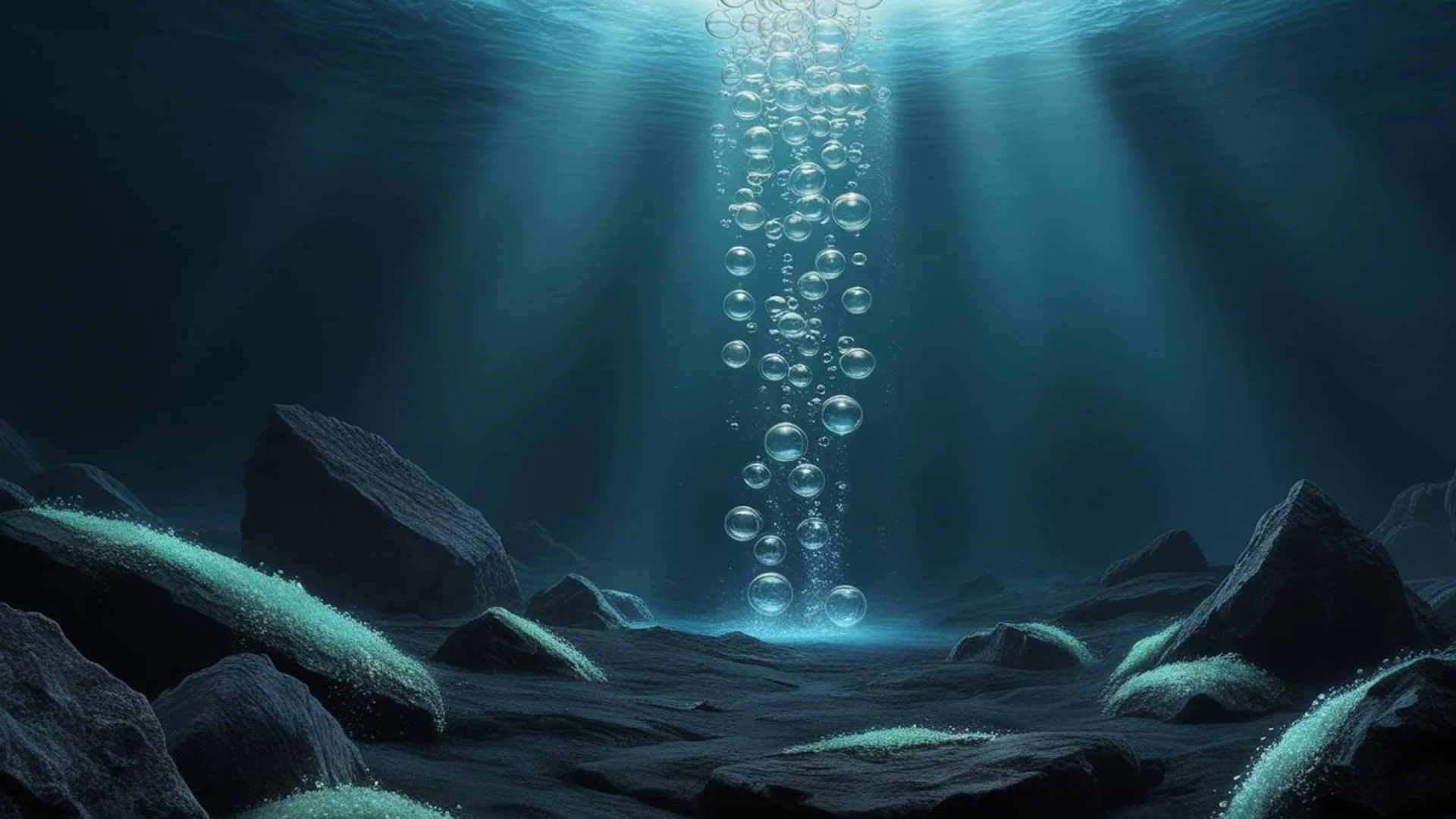
Four kilometres down on the floor of the Pacific, between Hawaii and Mexico, there is no sunlight and so no photosynthesis. Animals and microbes there use up oxygen that sinks from the surface over centuries. That is why Andrew Sweetman, a seafloor ecologist at the Scottish Association for Marine Science, assumed his instruments had failed when they showed oxygen going up.
His team had lowered landers that push small chambers into the sediment, seal them, and measure how quickly the oxygen inside falls as the organisms breathe. Over two days, in chamber after chamber, the oxygen did the opposite. It rose to more than three times the starting level. When the readings persisted across several expeditions and with different sensors, the team took them seriously. In July 2024 they published the result in Nature Geoscience under the title "Evidence of dark oxygen production at the abyssal seafloor".
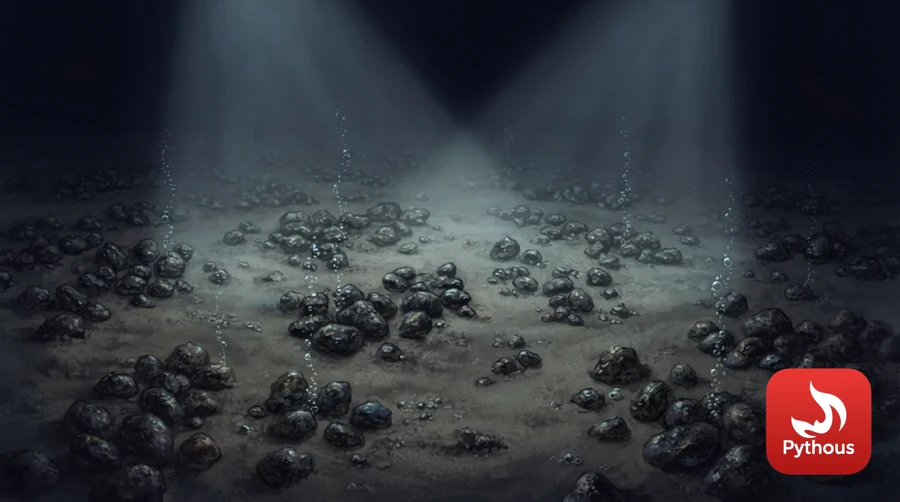
Illustration: polymetallic nodules on the Pacific seafloor, where 'dark oxygen' was reported.
Batteries on the seabed?
The site was in the Clarion-Clipperton Zone, a stretch of abyssal plain about 4,000 to 5,500 metres deep, covered with polymetallic nodules: lumps of manganese and iron oxides, roughly potato-sized, that grow a few millimetres every million years around a shell fragment or shark's tooth. The team brought nodules up and repeated the experiment in the laboratory, and oxygen was produced there too, without any light.
Their proposed explanation is electrochemical. Nodules contain layers of different metals, and the team measured voltages of up to 0.95 volts between points on a single nodule's surface. Splitting seawater into hydrogen and oxygen by electrolysis needs about 1.5 volts. Nodules lying close together might add up their voltages, the authors suggest, rather like batteries in series. This is a hypothesis, and the paper presents it as one.
The arguments that followed
The finding landed in the middle of a fight over deep-sea mining. The same nodules contain nickel, cobalt, copper and manganese, metals used in batteries for electric cars and power storage, and the Clarion-Clipperton Zone is the main target for companies hoping to mine them. Part of Sweetman's earlier fieldwork had been funded by one of those companies, The Metals Company, which rejected the conclusions.
Scientific criticism came too. Within months, groups of researchers posted critiques on the EarthArXiv preprint server. One, by Peter Downes and colleagues, criticised the methods, presented data and metadata from the same expeditions that the paper had not included, and concluded that the idea of nodules producing oxygen "can be wholly rejected". Another, by Lars Trellevik and colleagues, pointed to unvalidated measurement methods, missing observations that electrolysis would be expected to produce, and voltage measurements they considered unsupported. Sweetman's team responded that the result had been seen with two different kinds of sensor and over many deployments, and announced new expeditions designed to test it directly. As of 2026 the question is still open. That is a normal stage for a surprising result: it has been published, criticised, and is being tested.
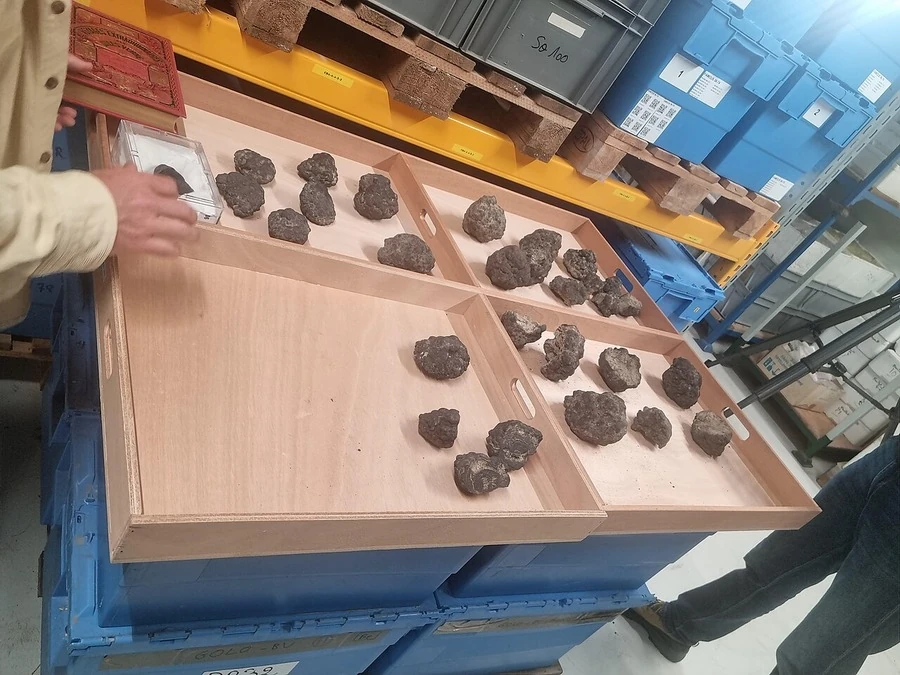
The same nodules are a target for deep-sea mining because they hold cobalt and nickel. Photo: Lucie Lautredou, Ifremer / Wikimedia Commons, CC BY 4.0
If the result holds up
A confirmed result would matter in two ways. The first is for the deep sea itself. If nodules supply some of the oxygen that seafloor animals use, removing them by mining could affect the ecosystem in a way nobody had considered. That fits a broader case already made by scientists: a statement calling for a pause on deep-sea mining until the ecosystems are better understood has been signed by hundreds of marine researchers. Regulation is moving at the same time. The International Seabed Authority, which governs mining in international waters, has been negotiating rules for years, and in 2025 the United States government began considering permit applications under its own law, a move many other countries opposed.
The second is for the search for life elsewhere. Scientists have generally assumed that a lot of free oxygen on a world points to photosynthesis, and therefore possibly to life. A process that makes oxygen from water and metal-rich rock, with no life involved, would mean oxygen alone is a weaker sign of biology than thought. It would also suggest that dark, cold places such as the oceans under the ice of Jupiter's moon Europa might have small local sources of oxygen. All of that depends on the first result surviving the tests now under way.
Sources
- Andrew K. Sweetman, Alycia J. Smith, Danielle S. W. de Jonge, Tobias Hahn et al., "Evidence of dark oxygen production at the abyssal seafloor", Nature Geoscience 17 (2024): 737–739. https://doi.org/10.1038/s41561-024-01480-8
- Peter Downes, Leigh Marsh, Joana Bento, Ashley Webber et al., "Contributions to the discussion of novel detection of dark oxygen production at the abyssal seafloor", EarthArXiv preprint, 2024. https://doi.org/10.31223/x5wb0x
- Lars Trellevik, Alan Denny and Wenche Svellingen, "Critical review of the article 'Evidence of dark oxygen production at the abyssal seafloor'", EarthArXiv preprint, 2024. https://doi.org/10.31223/x5n98f
- Deep-Sea Mining Science Statement (scientists' call for a pause on deep-sea mining). https://seabedminingsciencestatement.org/
- International Seabed Authority. https://www.isa.org.jm/





Comments (0)
Leave a Reply
Comments are moderated. Please read our Comment Policy before posting.
Log in to post a comment.