

 Jan 23, 2025
 2 min read
Human Vision Without Eyes

Can Humans See Without Eyes? Exploring the Boundaries of Perception
For centuries, vision has been considered an exclusive function of the eyes. However, science and philosophy have long speculated about the broader capacities of human perception. Can humans "see" without eyes? This question opens the door to fascinating discussions on sensory substitution, neural plasticity, and even metaphysical interpretations of perception.
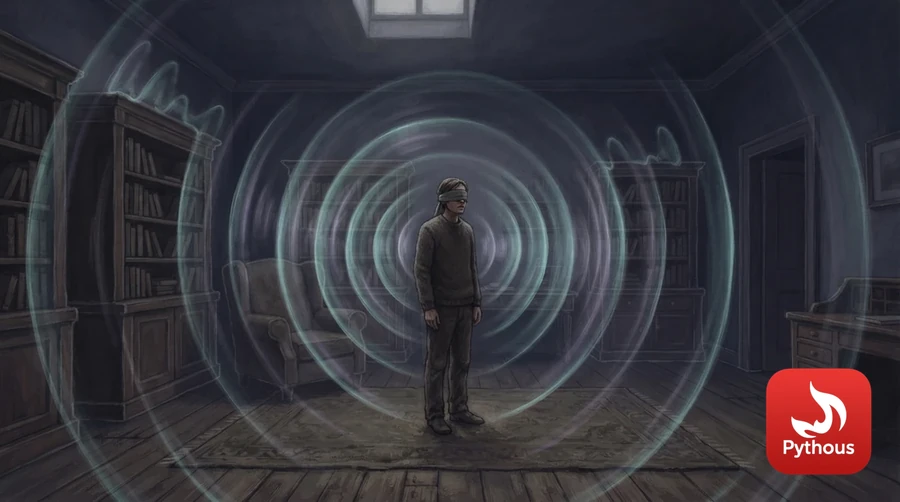
Illustration: echolocation, one way some blind people 'see' with sound.
Sensory Substitution: Seeing Through Other Senses
The idea of "seeing" without eyes has gained traction in scientific circles through the concept of sensory substitution. This occurs when one sensory modality compensates for the loss of another. For instance, blind individuals often develop heightened abilities in touch, hearing, and smell.
One of the most remarkable tools in this domain is the BrainPort, a device that converts visual information into tactile sensations on the tongue. By interpreting these signals, users can form mental images of their surroundings. Similarly, echolocation, used by some visually impaired individuals, enables them to navigate using sound reflections, much like bats.
The Role of Neural Plasticity
Neuroscience sheds light on how the brain adapts to sensory loss. Neural plasticity—the brain's ability to rewire itself—allows non-visual regions to process visual information. Studies using functional MRI (fMRI) have shown that the visual cortex of blind individuals often activates in response to auditory or tactile stimuli. This suggests that "seeing" may not be exclusive to the eyes but rather a function of how the brain interprets sensory data.
Mystical and Metaphysical Perspectives
Beyond the realm of science, mystical traditions and literature have long explored the idea of perception beyond the physical senses. Roald Dahl’s 1977 short story The Wonderful Story of Henry Sugar plays with the same idea: its hero spends years practising meditation until he can see without using his eyes. Dahl based the story on Kuda Bux, a real stage performer famous for reading and even riding a bicycle through traffic while heavily blindfolded, though blindfold acts like his are generally explained as stagecraft rather than true sight. Such narratives align with spiritual philosophies that emphasize intuition and the inner eye—often described as the "third eye" in Eastern traditions.
Implications for Technology and Human Potential
The exploration of non-visual perception has significant implications for technology and human potential. Advances in brain-machine interfaces and artificial intelligence could further enable sensory substitution, enhancing the lives of those with sensory impairments. Moreover, understanding how the brain adapts to loss can inspire new ways of thinking about human resilience and adaptability.
Conclusion
While eyes are the primary organs of sight, they are not the sole pathway to perceiving the world. Through sensory substitution, neural plasticity, and even metaphysical interpretations, humans demonstrate an incredible capacity to "see" beyond the traditional confines of vision. As science and philosophy continue to explore these frontiers, we may come to redefine what it truly means to see.



Comments (0)
Leave a Reply
Log in to post a comment.